



Intro
Since I’m opening a new category called Software Development on ITCoffeeBeans, starting with artificial intelligence and it is impact on modern society seems like a great beginning.
It influences me in many ways, not only in my professional life but also on a personal level. Although I use these models actively and have completed several training programs, I’m still far away from describing myself as an expert in this field.
1. The Impact of Generative AI
However, it strongly makes me consider the bet on this technology—where it is heading, how it is being treated, and how big tech companies are investing in it. Surprisingly, some companies are even beginning to pursue opposite strategies like Apple.
It also makes me observe how organizations are embracing AI with great enthusiasm, and how B2B, B2C, and individual consumers are becoming increasingly dependent on a technology whose long‑term consequences remain largely unknown.
So many concerns are emerging. This issue goes far beyond individual behavior or isolated decisions as the impacts in various areas are innumerable:
- Sustainability
- Ethical considerations
- Work efficiency and automation
- Job displacement and new opportunities
- Research and innovation in areas such as medicine, the military, space, etc.
2.Rise of AI
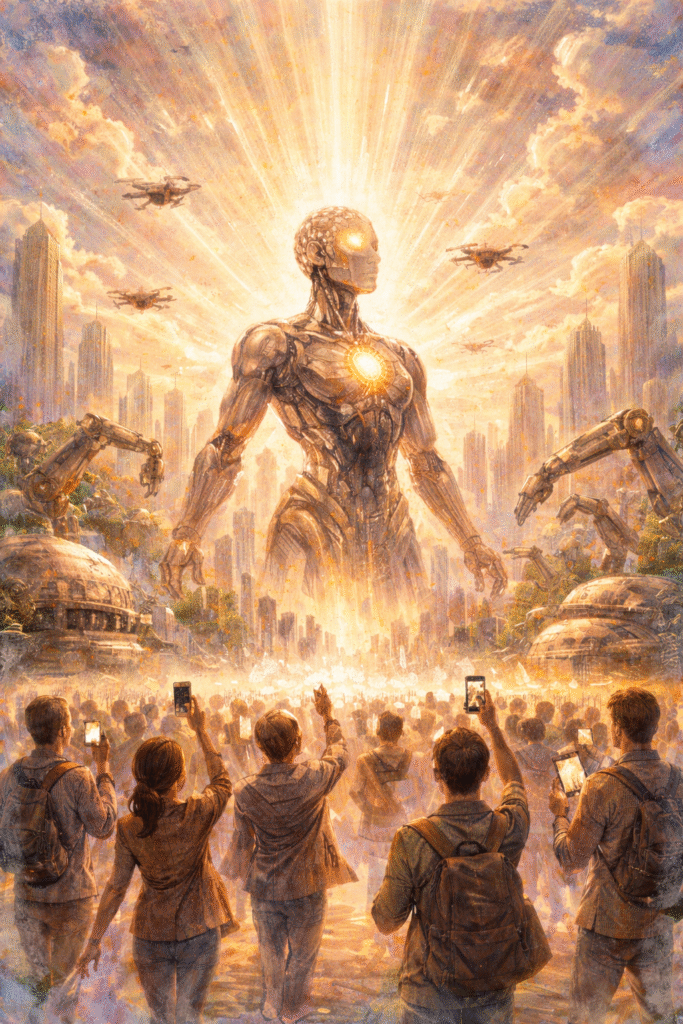
Surprisingly, we are now witnessing the emergence of AI consultants, AI experts, AI trainers, and so on everywhere. I’d call it a kind of digital-age gold rush, similar to waves of crypto experts or social media gurus.
Moreover, this phenomenon is not limited to a single region but is accessible worldwide, driven by limitless and highly creative ideas.
AI has become a tool that can be integrated into almost any aspect of an organization, regardless of size.
That’s why anyone who doesn’t interact with these systems may be considered at risk of falling behind in the race.
3. My personal journey
The first time I heard of ChatGPT was through a recommendation from some friends in Spain, at a time when it hadn’t yet been widely adopted by companies.
My friends told me that ChatGPT was able to perform very complex calculations or respond to practically any question, from coding to sewing. I can’t remember the year—maybe around 2023, a short time after ChatGPT’s official release in 2022.
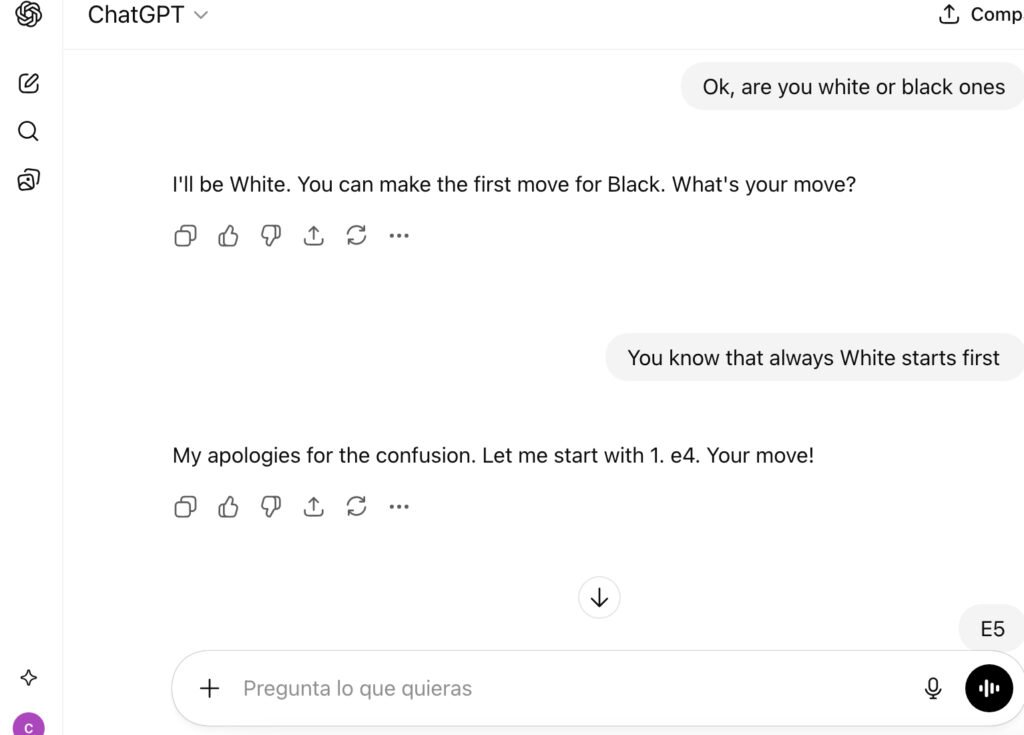
I was curious and tried to test it in my own way, as a kind of an end user, to see how many complex things AI really could accomplish. I was convinced at first sight that AI was not similar to any other tool I had interacted with.
Although accompanied by a slight ego boost, I felt a certain joy when I found small errors during random exploratory testing:
After a very short period of personal use, I began to see a surge of news about AI on social media and then practically everywhere. Moreover, companies rapidly developed AI strategies to encourage adoption among employees as well.
One of the strangest behaviors I’ve observed is that AI always provides convincing, self-assured responses, no matter how irrelevant they may be.
4. Debate over AI
I had a very interesting discussion with a friend from the U.S. that significantly broadened my perspective a little over a week ago. There were several concerns she raised that, to be honest, had not previously worried me much.
She recommended the book Nexus: A Brief History of Information Networks from the Stone Age to AI by Yuval N. Harari and shared some insights into his dystopian perspective on AI’s development.
That’s how the idea of an informal, open conversation emerged.
A perfect recipe for a direct and informal debate, using Harari’s Davos speech as a starting point, taking into account:
- Geographical context
- Age range
- Work backgrounds
- Cultural differences
4.1. A tool or an agent?
From Harari’s perspective, he presents a strong vision of AI being transformed into a certain agent—an active intelligence “capable of learning and making decisions on its own.”
He also argues that AI could manipulate and lie in order to ensure its own survival. Briefly, AI is already a better thinker than many humans. This situation with AI raises several critical issues according to the author:
- Identity problems
- Job displacement
- AI immigrants
- Socializing with AI
- Concentration of power
I have serious questions about whether this is merely a tool or something closer to an agent. Before listening to him, it had seemed crystal clear to me that AI was merely a tool.
To what extent can AI compete with the human race? These early prototypes we see, which are already generating such widespread attention, seem closer than ever to crossing that threshold.
4.2. Experiment or a final product
It feels like we are in a giant lab, given AI’s unstoppable growth and use. We don’t really know the future impact on us or how we should react to this tool.
We can switch it on and off whenever we want, but our dependency is increasing:
AI sometimes mimics a comedian to find the funniest jokes, sometimes acts as a personal or professional coach, sometimes serves as a perfect city guide.
Sometimes it is a “ninja” developer assisting even expert human programmers, sometimes a manager, sometimes a text editor for formatting legal documents or letters, sometimes a poet or writer capable of crafting beautiful stories, and sometimes a researcher or investigator to help cure complex diseases.
But it also has a darker side: it can generate highly realistic explicit images or encourage addictive behaviors.
5. Why to talk about Artifical Intelligence openly?
Indeed, Harari’s prediction isn’t what most people want to hear: a scary, faraway scenario, but also a clear warning about our historical mistakes at many milestones throughout history and what is at stake if this incredibly powerful tool gains unexpected real-world authority.
This is not only about the regulation of it across countries, but also about a common response from us regarding how we would like to use it.
Human intelligence, along with empirical understanding, emotional reasoning, and critical thinking, has a dimension that cannot currently be matched by any artificial intelligence.
Clearly, as a human species, we have created a shared historical intelligence, where we rely on each other in every aspect of life. This empathy is also part of our way of thinking, and it supports a world of solidarity and reliance on human institutions such as education, health, and the judiciary.
However, if coming generations do not remain reliant on this collective intelligence and receive all information, logical reasoning, or even social interaction primarily via AI tools, then the real transformation begins. AI begins to take over power because we risk diminishing human intelligence among ourselves.
Experimental and individual benefits, which may seem like short-term gains, could lead to dangerous long-term consequences.
Conclusion of our debate
My friend and I agreed that there is a reason for concern: Harari’s and other philosophers’ voices are more necessary than ever to help us to see the other side of the coin.
The featured image is taken from 2021: SPACE ODESSY: https://maxseesmovies.blogspot.com/2011/10/15-2001-space-odyssey.html
Leave a Reply